Split the Prompt Before You Sample
Facet mode breaks one question into distinct angles, then answers each angle once. Use it when more responses would only be rewrites.
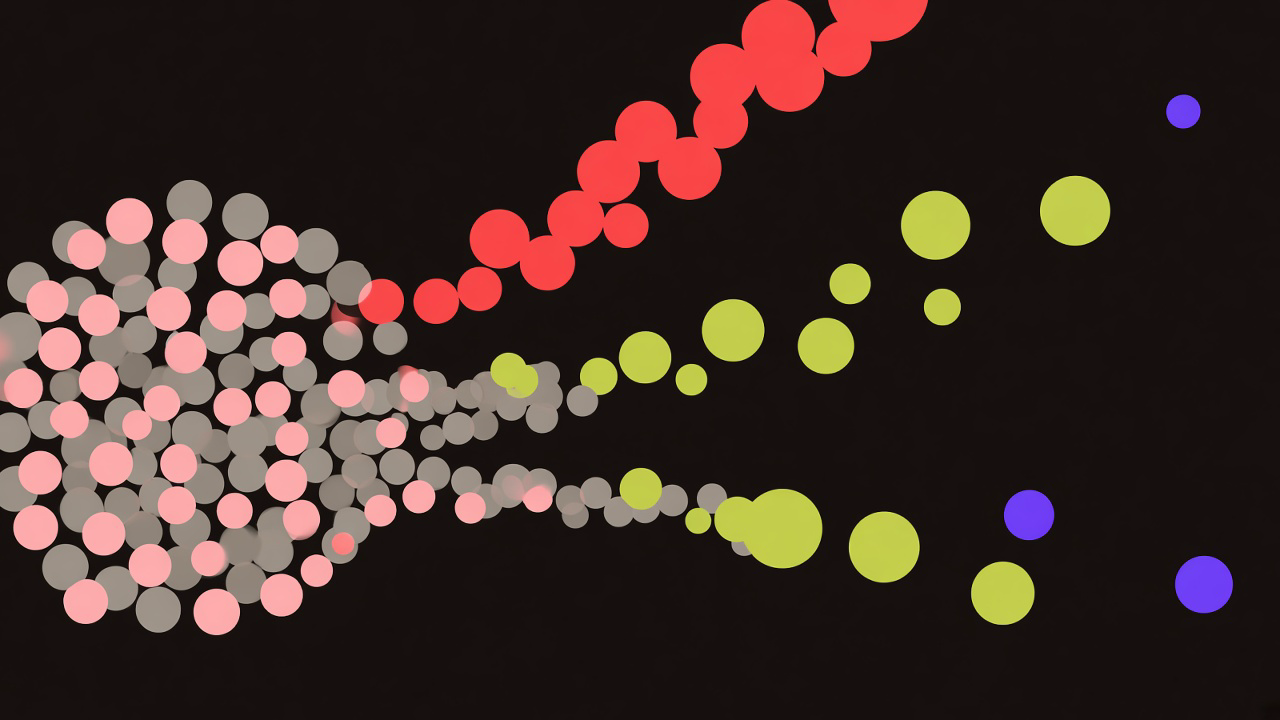
Standard mode asks one question several times. The model writes k answers, tags each with a probability, and you read the spread from conventional to wild. That is the right tool when the question is already the one you meant to ask.
A lot of prompts are not that settled. "Name a neighborhood coffee shop." "What should this essay argue?" "Give me a product idea for people who hate meetings." A higher k draws again from the framing the model settled on. The wild cards get stranger, and they stay inside that frame.
Facet mode spends a call on the frame itself. It asks for several different ways to pose your question, keeps a few of those angles, and answers each angle once.
The limit of a higher k
Verbalized Sampling recovers the long tail of a single distribution. The post on how it works is the mechanism: k responses, a probability on each, a threshold τ that tells the model how far into the tail to reach. The tiers in the app label that one distribution. Conventional is 30% and above, creative runs from 10% up to that line, and wild is everything below 10%.
Those labels describe answers to the same question. Five variations on a cozy third-wave cafe with a botanical name are the tail of a naming cliché. They say nothing about whether the shop could be named like a library, a complaint, or a regular's nickname. That difference lives one level up, in the question.
Two passes, not one longer sample
Facet mode is two requests.
In the first, the model you listed first is asked to write k sub-prompts. Each one has to approach the topic from a different angle, perspective, or framing, and each one carries a probability under your τ. The instruction is blunt about the point of the exercise: the sub-prompts should be different enough that they would trigger different answers later.
OpenDrift then keeps as many of those candidates as the Facets slider asks for, anywhere from 2 to 5. The kept angles are the ones the run will actually answer.
In the second pass, every selected model answers every kept angle. Each of those calls asks for a single response, with τ fixed at 1.0, so the second pass is an answer rather than another tail sample. Three facets and two models produce six cards. The estimate under the sliders is that product: facets times models.
How an angle gets kept
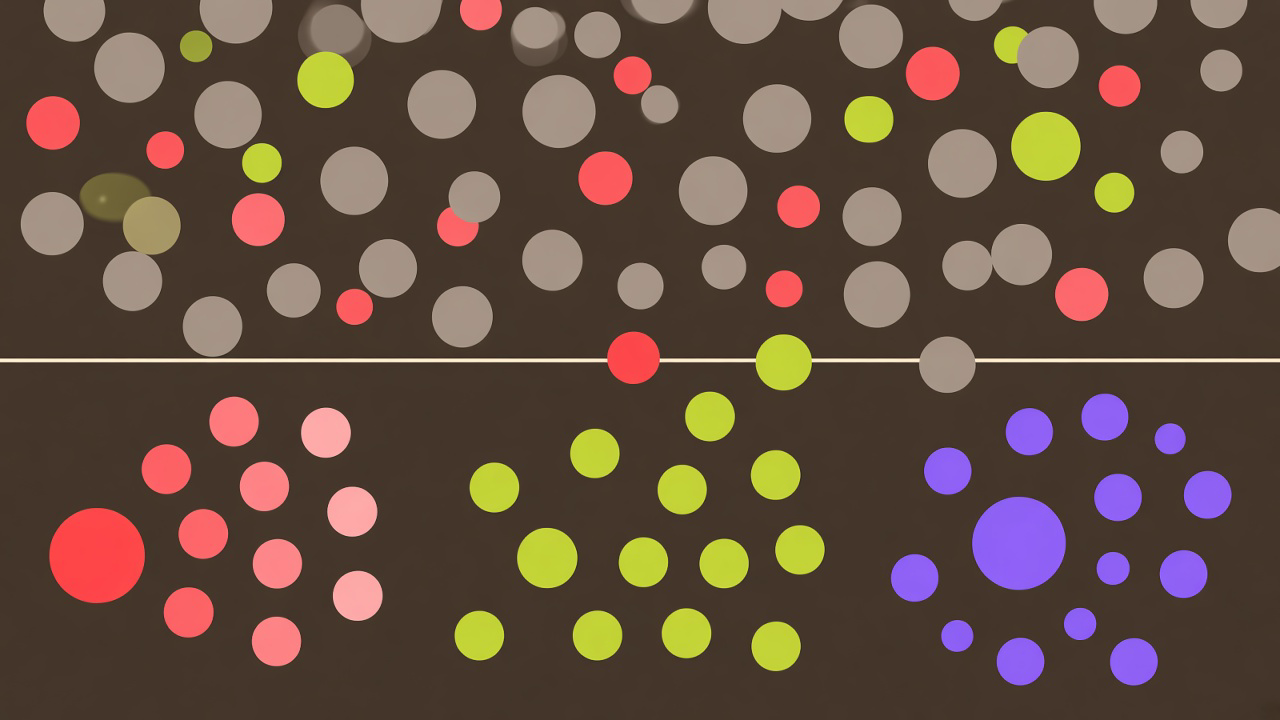
The first pass can return more candidates than you asked to keep. A k of 8 with three facets means eight proposed questions and three survivors.
The survivors come from both ends of that list. The candidates are sorted by the probability the model reported. The picker takes the lowest, then the highest, then the next lowest, then the next highest, until it has enough. A three-facet run therefore keeps the rarest angle, the most conventional angle, and whichever end comes next.
That mix is the point. Keeping only the tail would drop the ordinary reading of your prompt, which is often the reading a reader expects you to have considered. Keeping only the head would hand you standard mode with extra steps. Alternating holds both.
If k is smaller than the facet count, there is nothing to discard. Three facets and a k of 2 can only keep what the model wrote. Set k at least as high as the number of facets, and higher when you want the picker to have a real tail to choose from.
What the controls mean in this mode
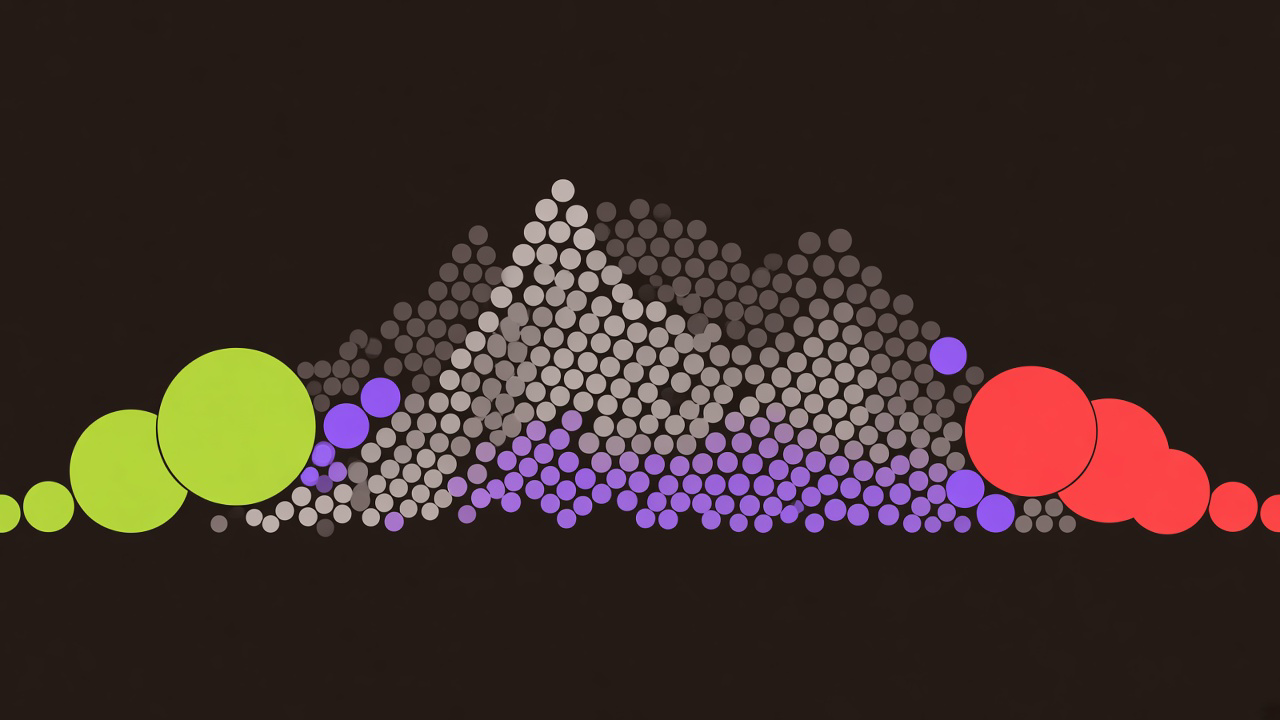
The Facets slider is the control that belongs to this mode. Two facets is a comparison. Five is a spread. Three is the default, enough to include both ends of the candidate list and one step inward.
k, labeled "Responses per model," is the size of the candidate pool in the first pass. It is the number of angles proposed, and the number of answers you read is one per facet, per model.
τ applies to the first pass. The hint under the slider still describes it. At 0.70 and above the angles stay near the conventional reading. At 0.30 the pool is balanced. At 0.10 it leans creative. Under that, the framings come from deep in the tail. The second pass ignores the slider. Each angle gets one answer.
The first model in your selection writes the angles. Every model you selected answers them. A multi-model run compares how each provider responds to those framings, and the framings themselves come from whichever model is listed first.
You also pay for the shape of the run. Free models stay free. On a paid model the bill is the angle-writing call plus one answer call per facet per model, each at the OpenRouter price plus the 7% platform fee.
When the question is already the point
Standard mode is the distribution of one question. Rank options, rewrite a sentence, see how far a model wanders while staying on a specific ask. Comparing models fairly, the subject of the diversity post, means the same prompt, the same k, and the same τ.
Facet mode fits when the interesting disagreement is about what the prompt is. A name, a thesis, a research question, a product direction. The prompt is a topic with several legitimate frames, and you want one serious answer from each frame.
Take the coffee shop. In standard mode, k of 5 tends to come back as five names in one genre. In Facet mode, with three facets, a k of 5, and τ at 0.10, the first pass is asked for angles that would change the answer: name it after a regular, name it as a refusal of the third-wave cliché, name it as if the shop were a public library. The second pass answers each of those once. You get three theories of what the shop is.
What the probabilities on the cards are doing
In a standard run the probabilities are the model's self-report across a set that should sum to about one. Sorting by them is a reading order for a single distribution. They are confidence labels, not token log-probs, which is the same caveat as everywhere else in OpenDrift.
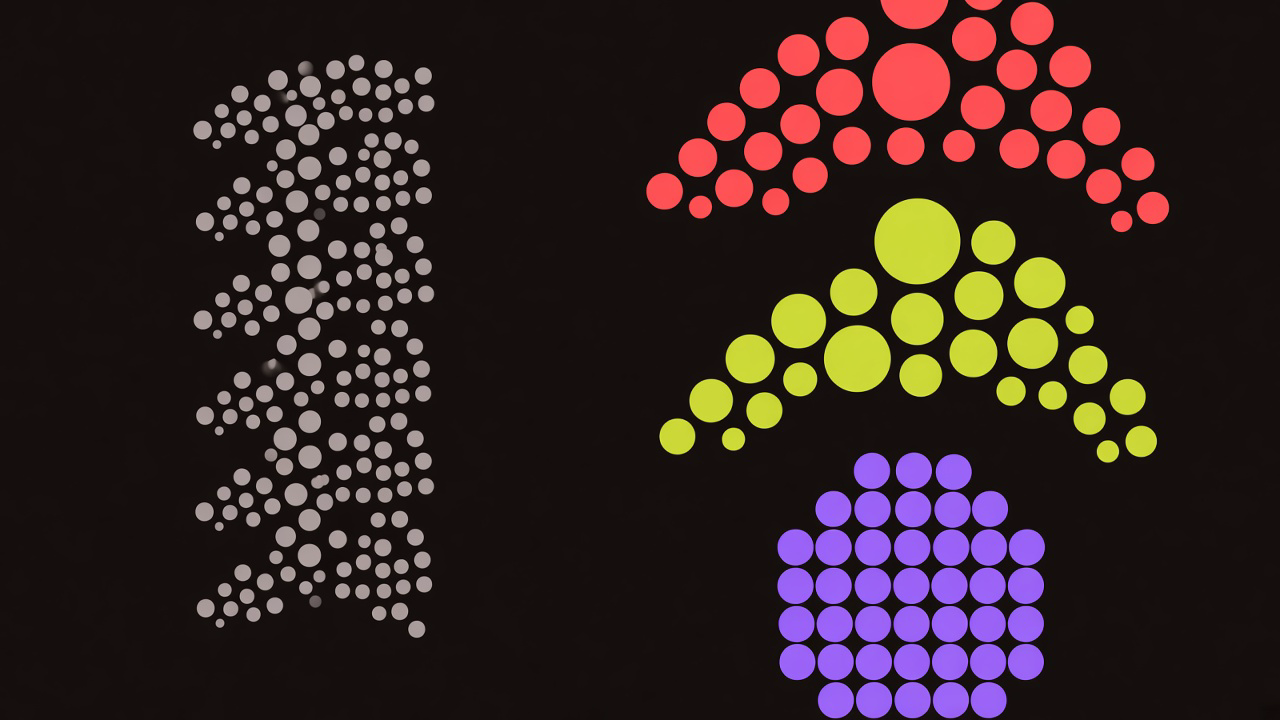
A facet run is a stack of separate one-answer calls. A 0.72 on one card and a 0.41 on another are separate reports from separate requests. The higher number is not the model's favorite angle. The choice of angles already happened, upstream, and the cards are the answers. If two of them still say the same thing, the facets collapsed. Widen k, or lower τ, and run it again.
When one card is the branch you want, stop splitting. Copy that answer into the prompt. Drift deeper on the card does exactly that. Sample the branch in standard mode. Facet mode is how you find a question worth asking twice.